The Uncredited Lives of Film and Television
They said there are no small parts. We found them.
OnlySmall Actors
The Uncredited Lives of Film and Television
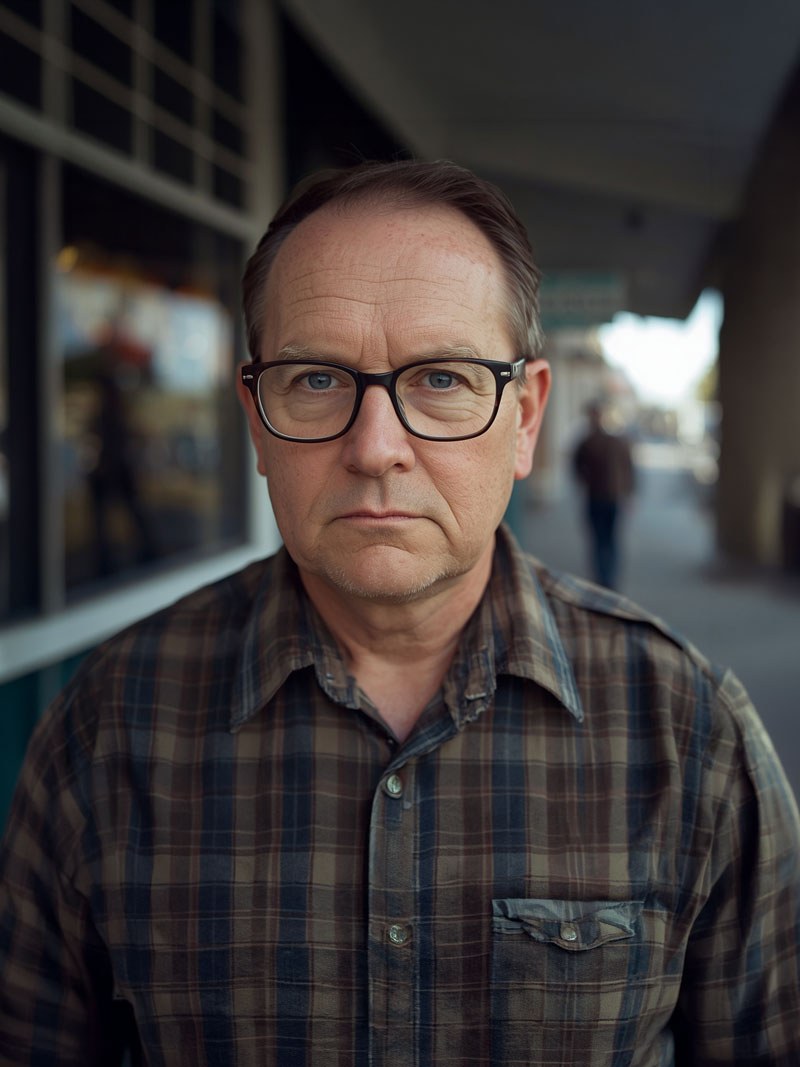
AI-generated portrait of Walter Saari
AI-generated · Fictional character
Home Fargo Profile
Film · Profile

Walter Saari

He had been a coroner for twenty-six years. He had served in Korea. He had seen enough. On a Sunday morning in February 1987, the Carlton County dispatcher called him at home and told him to drive out to Moose Lake. By that afternoon he had decided to retire.

Hibbing, and What Came After

Walter Saari was born in 1926 in Hibbing, Minnesota, the second son of a Finnish-American mining engineer who worked the open pit at the Hull-Rust mine and a schoolteacher who had grown up in Two Harbors. He went to medical school at the University of Minnesota on the GI Bill and was, by the time he finished his residency in 1957, the first person in his extended family to hold a doctorate of any kind. His mother kept the diploma framed in the dining room of the house in Hibbing for the rest of her life.

He worked at the Hennepin County Medical Examiner's Office in Minneapolis from 1957 to 1961. By the end of those four years he had attended the autopsies of just under three hundred decedents, the majority of them young men. He developed, during this period, a habit of taking long walks at lunch and a permanent slight tremor in his left hand. In the spring of 1961 he answered a small advertisement in the back of the Minnesota State Medical Association newsletter and accepted the position of Carlton County Coroner, based in Cloquet, two hundred and ten miles north.

His wife Ingrid was happy to leave Minneapolis. They had two daughters and a small house on Avenue B with a garden that wintered well. Walter never spoke about the Hennepin County years, except once to his older brother, who had asked, and the answer was: it was not what I went to medical school to do.

Scene from the film

Carlton County

Carlton County is small. Its population in 1987 was just under thirty thousand people, distributed across a few towns and a great deal of timber. The work of a county coroner in such a place is mostly the work of arriving at scenes and signing forms. Farm accidents in the warmer months. Hypothermia in the colder ones. Suicides, distributed evenly across the calendar. Car wrecks on the stretch of I-35 between Hinckley and Duluth. Drownings on the lakes — there are forty-six named lakes in Carlton County — most of them elderly fishermen who had known the water their whole lives and had simply stopped knowing it for the few seconds that mattered.

The homicides, when they came, were almost always domestic, almost always alcohol-related, and almost always not a mystery. A husband who had finally done what he had been threatening to do for years. A nephew who had come home drunk. The investigations were brief. The funerals were sparse. Saari, in his twenty-six years on the job, had signed exactly four homicide certificates that the Carlton County Sheriff's Department had described, in their own paperwork, as predatory rather than impulsive. Three of those four were resolved within a week. The fourth was an out-of-state trucker who had picked up the wrong hitchhiker on Highway 61 in 1979 and whose case file remained, as of his retirement, open.

This was the work he had moved north for. It was, by his own private accounting, manageable.

He had moved north for the work he could manage. He had managed it for twenty-six years.

— Cloquet Pine Knot, in his obituary, 2008

Sunday Morning

The dispatcher called him at 9:52 AM on Sunday, February 22, 1987. He was at his kitchen table, drinking coffee and reading the previous day's Duluth News-Tribune. Ingrid was at church. The dispatcher was a young woman named Beth Kallio whom Saari had known since she was a child. She told him that there had been an incident at a cabin on Moose Lake involving an officer-involved shooting, a death by axe, and what she called, after a pause, an industrial machinery situation. She told him that Brainerd PD was on scene. She told him the officer in charge was Chief Gunderson and that she had asked specifically for him.

He drove out in his own car. The road from Cloquet to Moose Lake takes about forty minutes in good conditions, a little longer in February. The sun was out. The temperature was eight degrees. He passed three churches with their parking lots full and a Conoco station with the price of regular at $0.89.

When he arrived at the cabin he found a state trooper at the end of the driveway, Marge Gunderson sitting in her squad car with the engine running and her hands on the steering wheel, an unattended wood chipper on the lawn near the lake, and the partial remains of a man in his early thirties scattered in a roughly fan-shaped pattern across approximately forty feet of snow. Saari worked at the scene for a little under four hours. He did not speak more than was necessary. He drove back to Cloquet at 4:15 PM, ate a sandwich Ingrid had left for him in the refrigerator, and sat in his armchair until it was dark.

Monday

He filed his retirement paperwork the following morning. The county had no formal process for a sitting coroner to step down mid-term, so he wrote a letter, on the same Olympia typewriter he had used for twenty-six years of death certificates, addressed to the Board of Commissioners. The letter was four sentences long. Effective immediately. The autopsy report on Carl Showalter was completed by his successor, a woman named Dr. Linda Anderson out of the Duluth office, who had been preparing for the role for some time. Saari signed the case over to her at lunch on Wednesday and went home and did not come back.

After

Walter Saari lived another twenty-one years. He and Ingrid stayed in the house on Avenue B. He built a small workshop in the garage and refinished old furniture for friends and for the St. Mark's Lutheran rummage sale. He developed an interest in birds and kept a notebook of every species he saw at the feeder, which by the end ran to four volumes. He read history, mostly Civil War and Finnish independence. He never returned to medical practice in any form. When the county sheriff's office asked him, in 1991, if he would consent to be interviewed for a book a journalist was writing about the events of February 22, 1987, he declined by letter. The letter was three sentences long. He never explained the decision to his wife or his daughters, and they did not ask.

He died in his sleep on October 14, 2008, at the age of eighty-two. The Cloquet Pine Knot ran a respectful obituary that mentioned his Korean War service, his twenty-six years as coroner, and his quiet retirement. It did not mention February 22, 1987. The reporter, a younger man who had not been there, did not know to.

In a small drawer of the rolltop desk in Saari's workshop, his older daughter found, the week after the funeral, a single yellow legal pad on which her father had written, in his careful left-handed script, a list of the four things he had thought about that morning while standing at the edge of the lake. She read it once. She did not show it to her sister. She put the legal pad in a paper grocery bag and burned it in the fireplace that night, which was something her father had once, in passing, told her she was permitted to do, with anything she found, when the time came.

It was not what I went to medical school to do.

— Walter Saari, to his brother, 1962
Advertisement
Ad · 728×90