The Uncredited Lives of Film and Television
They said there are no small parts. We found them.
OnlySmall Actors
The Uncredited Lives of Film and Television
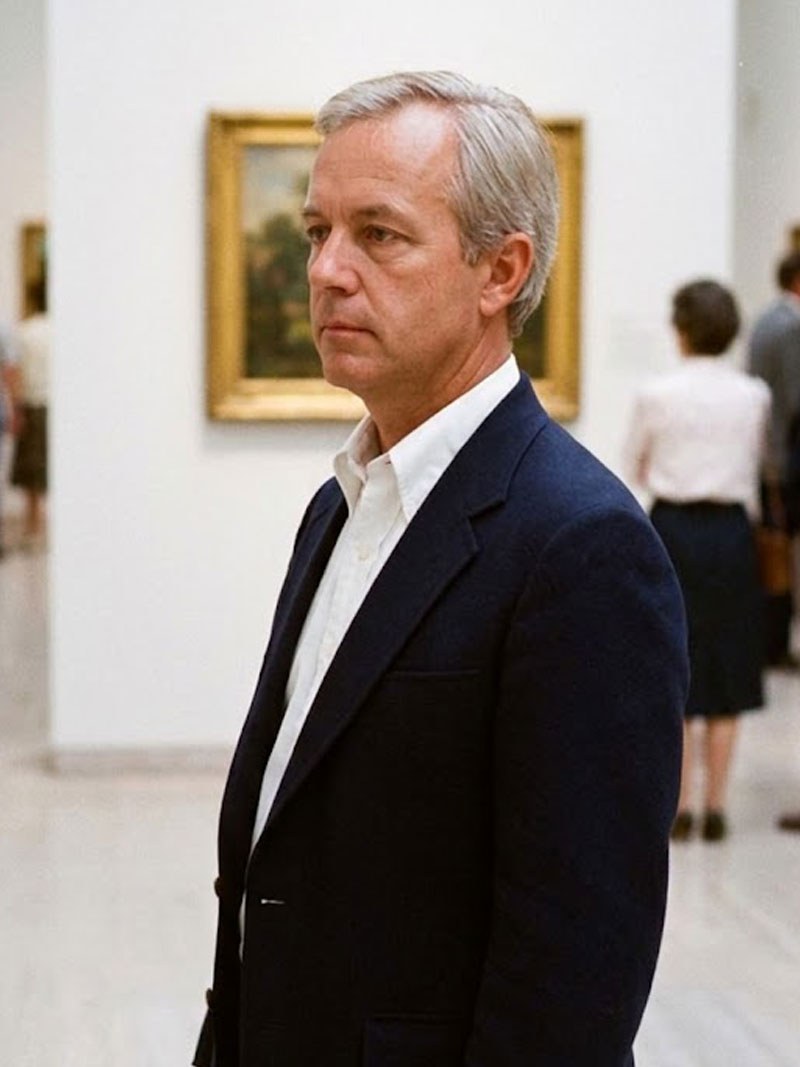
AI-generated portrait of Raymond Fitch
AI-generated · Fictional character
Home Ferris Bueller's Day Off Profile
Film · Profile

Raymond Fitch

He stands with his arms crossed in the Impressionist galleries, studying a landscape he has looked at thirty or forty times before. Behind him, three teenagers are having what will turn out to be one of the most important afternoons of their lives. He doesn't know that. He is looking at the painting.

4.4s total screen time · appears at 57:11

A Dependable Man

Raymond James Fitch was born in March of 1938 in Wilmette, Illinois, the second of three sons of a hardware store owner named Donald Fitch and his wife, Evelyn. The family attended First Presbyterian on Lake Avenue. Raymond was not a remarkable student, but he was a reliable one — the kind of boy whose teachers wrote "conscientious" on his report cards and meant it as high praise.

He attended the University of Illinois at Urbana-Champaign on a partial academic scholarship, studied business with a concentration in finance, and graduated in 1960 without distinction or incident. He returned to the North Shore, took a position as a junior loan officer at Midwest Federal Savings, and within three years had moved to Continental Illinois National Bank and Trust, where he would remain for the next twenty-three years.

He married a woman named Patricia Sorrel in 1963. They bought a house in Wilmette, four blocks from the house he grew up in. Patricia taught third grade at Harper Elementary. They had one son, David, born 1967. Raymond coached David's Little League team for two seasons and found he was not suited for it. He attended every game anyway.

The Art Institute entered his life by accident in 1971, during a client lunch that ended early and left him with forty minutes to fill. He walked in, paid the admission, and found himself in front of Georges Seurat's A Sunday on La Grande Jatte for twenty-two minutes without fully understanding why. He came back the following Tuesday. Then the Tuesday after that. He never told Patricia about the Tuesdays. Not because he was hiding anything. Because he didn't have the words for what it was.
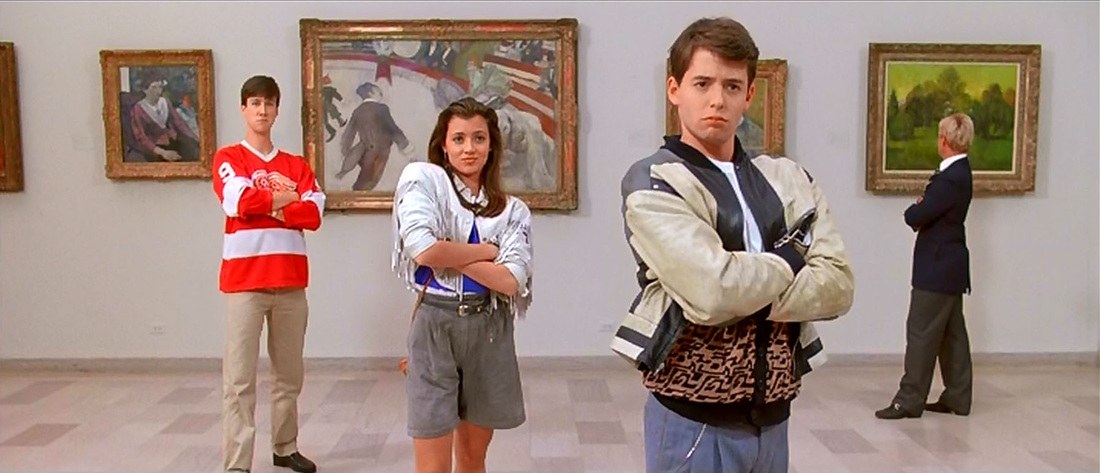
He never told Patricia about the Tuesdays. Not because he was hiding anything. Because he didn't have the words for what it was.

Scene from the film

The Men Who Stayed

On May 9th, 1984, federal regulators announced that Continental Illinois National Bank and Trust was insolvent — the largest bank failure in American history to that point. The FDIC intervened. The government took an eighty percent stake. The newspapers called it a bailout. Inside the building on South LaSalle Street, they called it Tuesday.

Raymond Fitch kept his job. His department — trust administration, specifically the management of mid-sized estate accounts for families in Lake and Cook Counties — was considered stable. He was not among the hundreds who were let go in the restructuring. He cleaned out nothing. He updated his resume for the first time since 1971, looked at it for several minutes, and put it in a drawer.

What changed was harder to name. The floors above his were suddenly occupied by federal examiners. Colleagues he had eaten lunch with for a decade were gone by Friday. The bank still opened every morning. Raymond still arrived at seven forty-five, still wore a blazer, still took the elevator to the fourteenth floor. But something in the institution had shifted in a way that no external observer could see and that he himself could not fully articulate to Patricia when she asked how things were at work.

He began coming to the Art Institute more frequently. Tuesdays and Thursdays now, weather permitting. Eleven minutes on foot from the LaSalle Street entrance, across the river and east on Adams. He had a favorite bench in Gallery 219, though he rarely sat on it. He preferred to stand, arms crossed, at a distance he had calibrated over fifteen years to be exactly right for the painting he was looking at.

He had survived the thing everyone said was unsurvivable. He was not sure what that said about him.

What Held

Continental Illinois was absorbed by BankAmerica in 1994. Raymond received a letter informing him of his separation package in March of that year, eleven weeks before his scheduled retirement. He read it twice, folded it along its original crease, and placed it beside the updated resume in the drawer.

He and Patricia drove to Galena for a long weekend. They ate at a restaurant on the main street, walked along the river, and did not discuss the letter in any meaningful way. Raymond had never been good at the meaningful conversations. Patricia had learned, over thirty years, which ones to push and which to let pass. She let this one pass.

In retirement he did what he had always done, but without the constraint of being back by one thirty. He went to the Art Institute on Tuesdays and Thursdays and sometimes on Saturdays when David brought the grandchildren. He volunteered as a gallery docent starting in 1997, a role for which he was quietly excellent — precise, unhurried, never condescending, and genuinely uncertain about the things he was genuinely uncertain about. The volunteer coordinator, a woman named Mrs. Alderman, said he was the best docent they had who had never studied art formally.

Patricia died in 2009, a Tuesday in November. Raymond went to the Art Institute the following Tuesday anyway. He stood in Gallery 219 for a long time. He did not tell anyone he had been there.

David drives up from Indianapolis more regularly now. Raymond seems fine. He is fine. He has always been fine.

He still has the resume in the drawer. He has never looked at it again.

I have forty minutes.
This is the one I always come back to.
I should eat something.
Patricia would have liked this room today. The light.

Raymond Fitch is eighty-seven years old. He still lives in the Wilmette house, though David has been asking about other arrangements. He volunteers at the Art Institute on Thursdays only now. His favorite docent tour runs forty-five minutes and ends in Gallery 219. He never mentions the landscape painting specifically. He lets people find it themselves.

  • Has never visited the Impressionism wing at the Metropolitan Museum of Art, though he has been to New York eleven times.
  • Owned the same navy blazer from 1979 until 2001, when David quietly replaced it with an identical one.
  • Cannot remember the name of any of his Little League players except one — a left-handed boy named Gregory, who was also not very good.
  • Has a folder in his kitchen drawer labeled IMPORTANT that contains the original deed to the Wilmette house, his marriage certificate, and a postcard of A Sunday on La Grande Jatte that he bought at the museum gift shop in 1974 and never sent to anyone.
Advertisement
Ad · 728×90