The Uncredited Lives of Film and Television
They said there are no small parts. We found them.
OnlySmall Actors
The Uncredited Lives of Film and Television
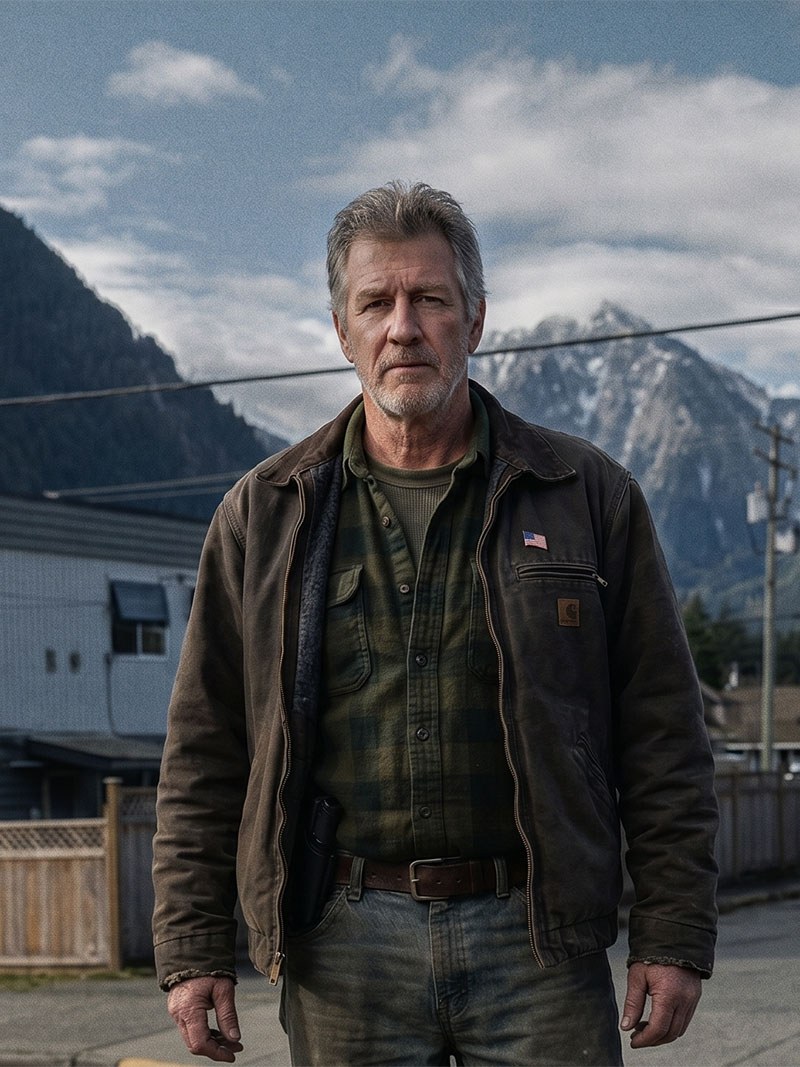
AI-generated portrait of Gary Pritchard
AI-generated · Fictional character
Home First Blood Profile
Film · Profile

Gary Pritchard

He owned a gun shop in Hope, Washington. He served two tours in Vietnam. On Christmas Eve 1981, he came home to find his life's work in pieces. He understood the man who did it better than anyone in town.

The Outpost

The Outpost sat on the south end of Wallace Street in Hope, Washington, in a single-story cinder-block building Gary Pritchard rented from a man named Doug Bisset for $240 a month. He opened it in the spring of 1973 with a $4,000 loan from First Interstate Bank, a sign hand-painted by his wife, and an inventory of fifty-six rifles, eleven shotguns, a glass case of Buck knives, and roughly two thousand dollars' worth of Hodgman waders. The neon out front called it the second-biggest gun trader's in the West, which was an exaggeration, but only just. It was busy enough.

He stocked Christmas lights every November and left them up through January. He kept a coffee pot going from six in the morning until close. Hunters came in for licenses, for ammunition, for the kind of conversation a man could only have with another man who had been somewhere cold and quiet at four in the morning waiting for an animal to make a mistake. Gary listened more than he talked.
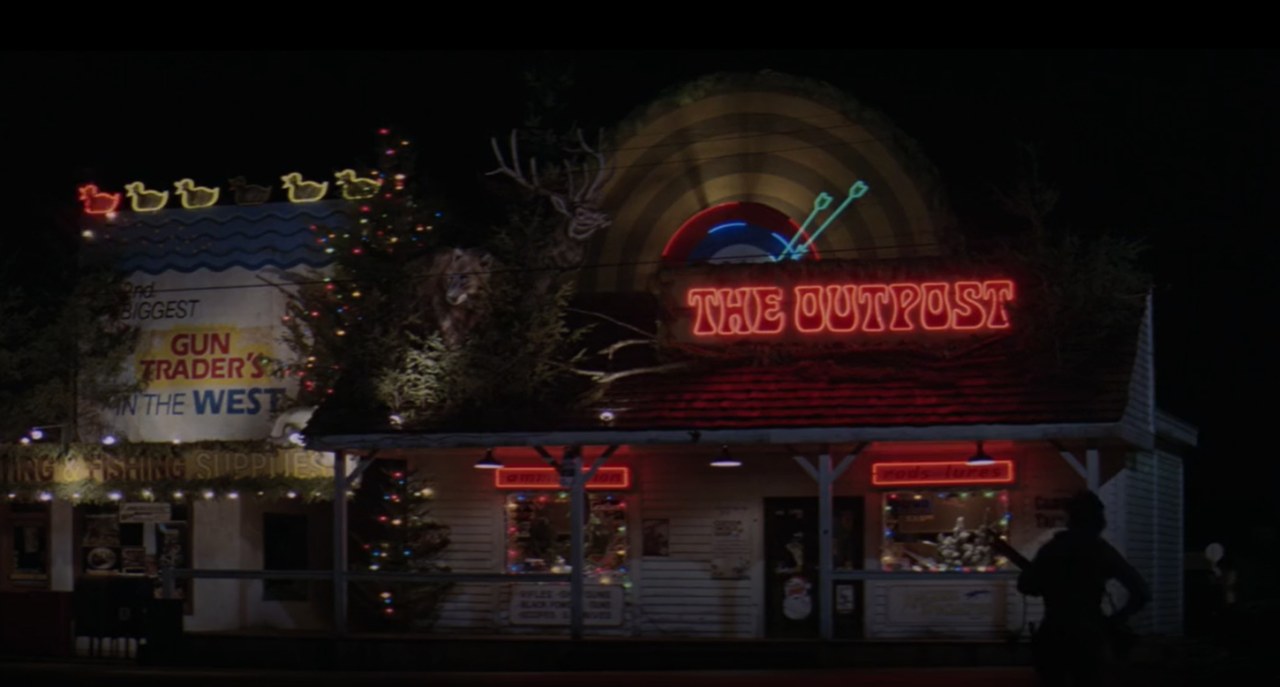
Scene from the film

Vietnam

Gary enlisted in 1962 at the age of twenty, against his mother's wishes and over his father's silence. He served two tours with the 101st Airborne. He came home in 1967 weighing thirty pounds less than when he left, with a Bronze Star he never displayed and a habit of waking up at 4:30 in the morning that he never broke.

He rarely spoke about the war, and when he did it was in the manner of a man recalling someone else's life. The closest he came was a remark made to Len Coates, who ran the Hope Standard for thirty-one years and who would later tell this story at Gary's funeral. Coates had asked him once, in 1985, what he thought of the man who destroyed his store. Gary had looked at him for a long moment and said, you can take a kid like that and put him in a place where the rules are different and then you bring him home and tell him the rules are different again. He didn't lose his mind. He just remembered what they trained him to do.

Coates would observe, years later, that two men with nearly identical resumes had passed through Hope that December — both Army, both Vietnam, both decorated, both trained to do extraordinary things and then sent home to figure out the rest. One ran a hunting supply store and went to bed at nine o'clock. The other tore the town apart. Coates never quite knew what to make of that, and he wrote about it sometimes, in the careful way small-town editors write about things they cannot fully explain.

The sheriff built that. The sheriff lit the match. The kid was just the fire.

— Len Coates, Hope Standard, 1988

The Night

On the evening of December 23, 1981, Gary closed the store at 5:30, drove home, ate a supper of pork chops and frozen peas with his wife Ruth, and went to bed early. He was forty years old. He had not slept through a full night since 1965 but he had learned to lie still until morning.

What happened in the early hours of December 24 has been documented elsewhere. John Rambo, having escaped the Hope County jail and taken refuge in the mountains north of town, made his way back into Hope under cover of darkness. He set fire to a Chevron station on the south end of Wallace Street as a diversion. While the volunteer fire department responded to the gas station, Rambo broke through the back door of The Outpost and went to work.

He took ammunition, kerosene, and gunpowder. He took an M60 and what he needed for it. He set the rest in a calculated line across the floor of the front room and the back stockroom — kerosene first, then the gunpowder trail — and lit it on his way out. By the time the fire trucks reached the south end of Wallace Street, the front of The Outpost was fully involved. The neon sign, the hand-painted boards above the door, the inventory in the front display cases — all of it gone. The cash register was never found.

The Christmas lights, somehow, were still burning when the fire trucks arrived. They burned until the power finally cut at 4:18 in the morning.

Gary heard the explosions from his home three blocks away. He didn't get out of bed. Ruth asked him if he was going to go see what happened. He said no. He said it would still be there in the morning, and whatever it was, the morning was when he would deal with it.

The Morning

He arrived at the storefront at 7:15 AM in a borrowed pickup truck. The fire was out. Two sheriff's deputies were standing in the parking lot drinking coffee from a thermos. The front of the building was gone. The roof of the inventory section had partially collapsed. A National Guard helicopter was visible on the ridge above town. Sheriff Teasle was nowhere to be seen.

Gary walked through the wreckage for forty minutes without speaking. He picked up a single Buck knife from the gravel of the parking lot, examined it, and put it in his jacket pocket. He asked one of the deputies if anybody had been hurt. He was told that the deputy wasn't sure. He nodded, and got back in his truck, and drove home.

He did not file a complaint with the Hope County Sheriff's Department. He filed an insurance claim against his commercial policy and was eventually awarded $19,400, of which his deductible swallowed $2,000. He took out a second loan from First Interstate, this time for $22,000. He hired a contractor named Pete Friel, who lived two blocks over. He reopened The Outpost on March 8, 1982, with a smaller inventory, a less ambitious sign, and the same Christmas lights, which he ran in the window from November through January for the rest of his working life.

After

The Outpost stayed open for nine more years. Gary sold it in 1991 to a man named Brian Cosgrove, who renamed it Hope Sporting Goods and ran it until 2003. Gary and Ruth retired to a small house on the Skagit River, north of Mount Vernon, where Gary kept a workshop in the garage and built duck decoys for the rest of his life. He was diagnosed with pancreatic cancer in 2013 and died in the spring of 2014, at the age of seventy-two.

He was asked about that night perhaps two dozen times over the course of his life — by reporters in the early years, by curious locals later, by his own grandson once at Thanksgiving. He always gave more or less the same answer, which was that the man who did it had been somewhere most people couldn't imagine, and that what happened to The Outpost was, in the larger arithmetic, not the worst thing the war had done to anybody.

There is no plaque at the site of The Outpost. The cinder-block building was torn down in 2007 and replaced with a coffee shop. The Hope Standard ran a small piece on the demolition, in which Gary was quoted as saying it was probably for the best.

What happened to The Outpost was, in the larger arithmetic, not the worst thing the war had done to anybody.

— Gary Pritchard, in conversation, 2002
Advertisement
Ad · 728×90